Around your surgery — not during it.
Your surgeon's work is the visible part. But there is a whole other medical discipline running quietly alongside it: the anesthesia, the airway, the fluids and the monitors, the nausea protocols, the pain protocols, the timing of everything from your last cup of coffee to your first steps at home.
That discipline is called
NCSS was built around perioperative care. It is our medical director's specialty, it is the reason our safety record is what it is, and it is the largest single reason a patient tends to choose NCSS a second time.
We call our program
i.
Before Your SurgeryYour Rest-Assure consultation.
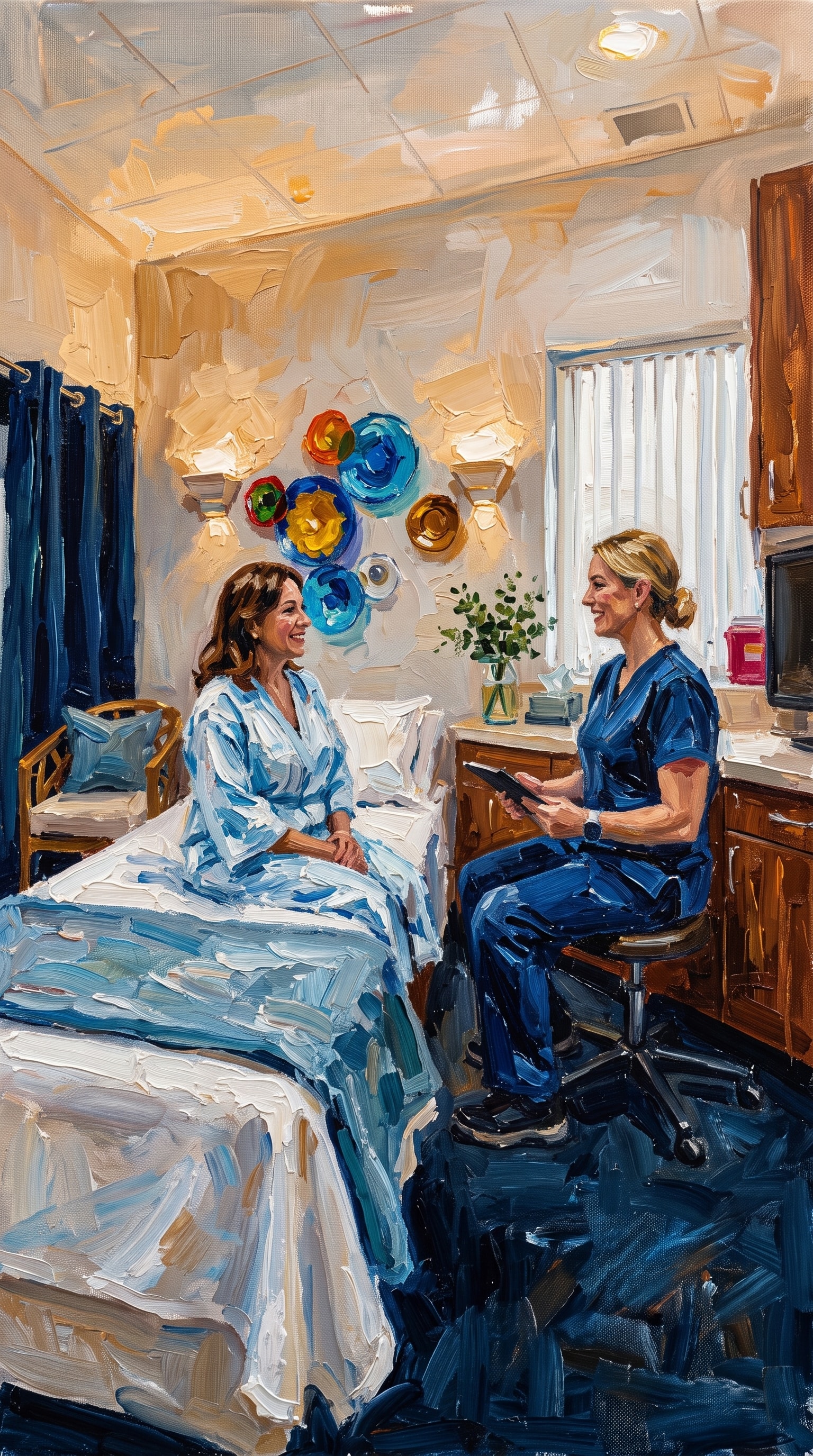
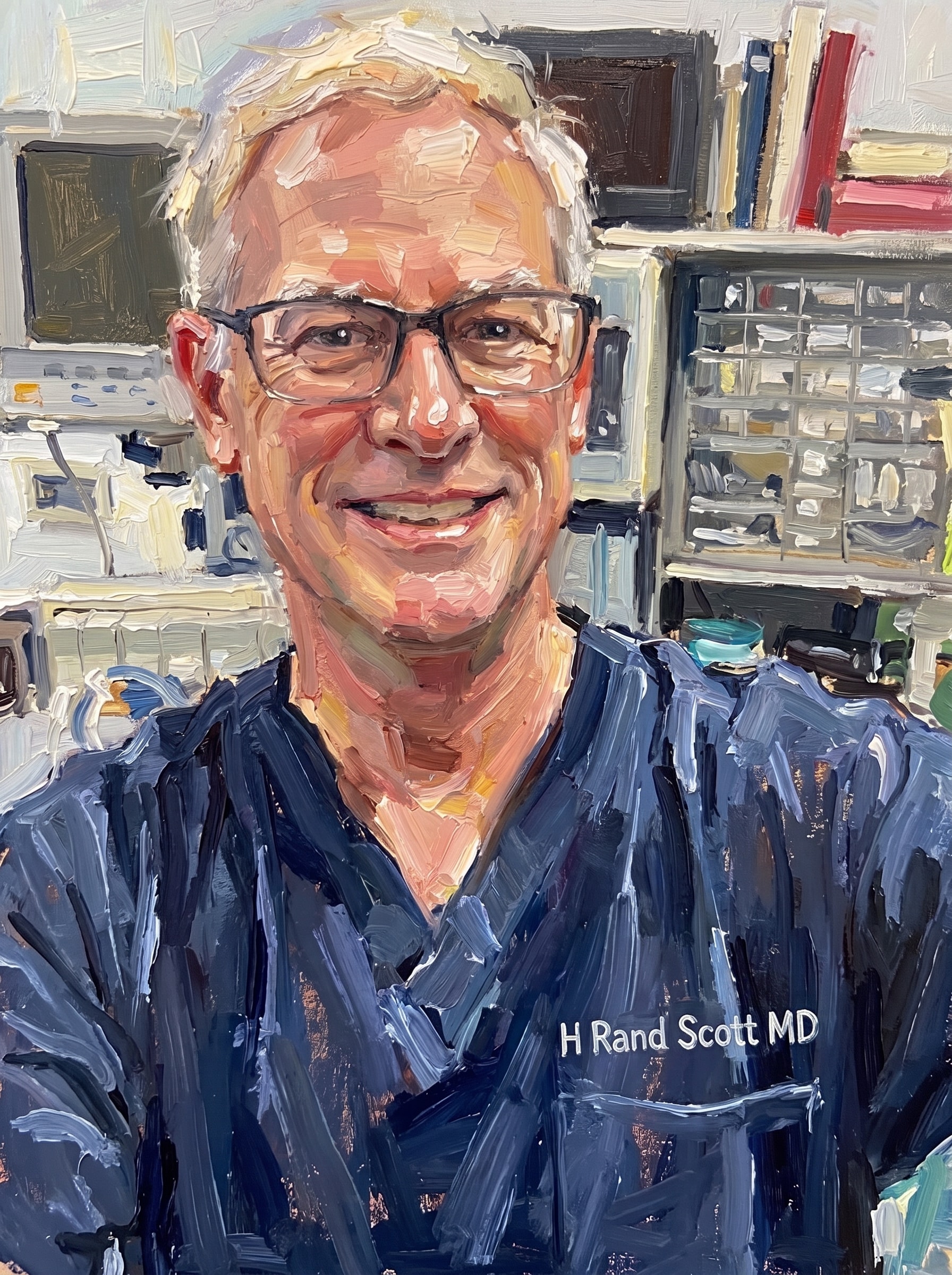
Every patient scheduled for surgery at NCSS is invited to a complimentary Rest-Assure consultation with our medical director, Dr. Rand Scott. It is a physician conversation, not a paperwork session — and it exists because how well you prepare for surgery is the single largest predictor of how comfortably you recover from it.
During the consultation, Dr. Scott will:
- ●Review your complete medical history, including your regular medications, supplements, and prior anesthesia experiences
- ●Design a specific medication-management plan for the days leading up to surgery — what to stop, what to continue, and when
- ●Walk through post-operative expectations: pain, activity, diet, sleep, driving
- ●Confirm your discharge plan — timing, ride, first-night care
- ●Answer any questions you have about anesthesia, medications, or the day itself
ii.
During Your SurgeryPhysician anesthesia. Every case. No exceptions.
There are two approaches to anesthesia in ambulatory surgery. In one, a nurse anesthetist (CRNA) administers your anesthetic under variable degrees of physician supervision — sometimes with the supervising physician in the room, often not. In the other, a physician anesthesiologist personally provides the anesthetic from start to finish.
At NCSS, we use the second approach exclusively. We have never employed CRNAs. Every anesthetic at our facility — general, sedation, regional, local with monitoring — is administered by a board-certified physician anesthesiologist, personally, from induction through emergence.
This is not the industry standard. It is our standard. It costs more. It is worth it.
iii.
The ProtocolWarmed. Hydrated. Prepared.
Every NCSS patient is welcomed to a warm pre-op room. Every patient receives warmed pre-hydration IV fluids while resting comfortably in their private suite. Operating rooms are cold, to reduce germs. However we use warm forced air blankets to keep you warm while the surgeons stay cool and focused.
Anti-nausea medications are administered prophylactically, before nausea has a chance to develop. Non-opioid analgesics are administered as part of a multimodal pain strategy that minimizes narcotic requirements and speeds recovery. Antibiotics, when indicated, are timed precisely relative to incision.
These are small things. Individually, none of them is revolutionary. Collectively, they are the difference between waking up shivering, nauseated, and in pain — and waking up warm, comfortable, and ready to go home.
Nearly 30 Years
AAAHC Accreditation Without Interruption
Zero
No Hospital Transfers From Our Facility — Ever
One-to-One
Physician Anesthesia on Every Case
iv.
When Complexity ArrivesWhat we do differently.
The routine cases are not what defines a surgical facility. What defines it is what happens when something unexpected occurs — a difficult airway, an unusual reaction, a bleeding pattern outside the norm.
Our medical director is present in for every case at NCSS. Our nursing staff is dedicated and trained in plastic surgery care. Our equipment is not just adequate — it is what you would expect in Newport Beach. Our operating rooms have the technology needed to make your surgery safe and comfortable.
We prepare for complexity so we can respond to it calmly when it arrives. And in nearly three decades of operation, we have never had to transfer a patient from our facility to a hospital.
Rest-Assure exists because I have seen what happens when perioperative care is treated as an afterthought. I have also seen — thousands of times now — how happy people are when they can communicate with their anesthesiologist and have their fears and expectations addressed.
I built the program around a single question: What would I want if the patient were me? Every protocol at NCSS is my answer to that question.
H. Rand Scott, MD
Medical Director
Where to next.
Meet Dr. Scott
Board-certified anesthesiologist. Pain physician. Founder of NCSS.
Read More →Preparing for Surgery
What to expect from the moment you call to the morning of your procedure.
Read More →